Version 1.0 · For trained practitioners. Not a self-help resource.
© 2026 Widdows Consulting Ltd
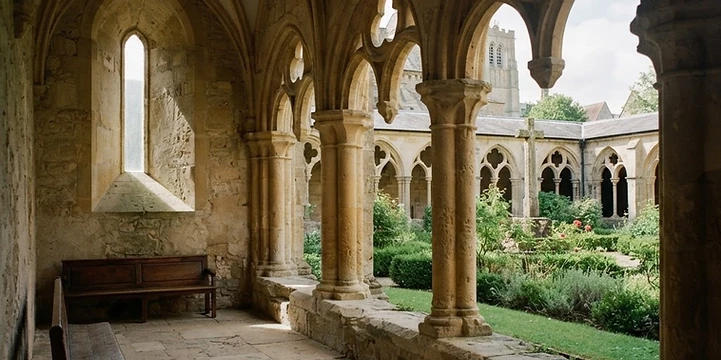
Christian Mysticism
The contemplative strand of Western Christianity from Augustine and Pseudo-Dionysius through Eckhart, Teresa of Ávila and John of the Cross. Historians of the tradition describe it as consciousness of the immediate presence of God, conventionally mapped as purgation, illumination and union; the "dark night" is John of the Cross's own term (c. 1585).
Europe · Status: Open
Coaching Practitioner Manual §2.4, pp. 30–33 · mislabelled mapping header corrected; citations unverified. Correspondences are exploratory, not validated.
Overview
The manual presents purgatio (purification), illuminatio (illumination) and unitio (union). It names John of the Cross, Teresa of Ávila, Meister Eckhart, Julian of Norwich and Thomas Merton, whose theologies should not be collapsed together. The “dark night” belongs to a Christian devotional context; it must not romanticise suffering or displace safety assessment. A secular coach may ask about faith, doubt, prayer and community without imposing theology.
Coaching relevance
| Dimension | Source perspective | Coaching framing |
|---|---|---|
| Presence | Stillness and listening for God | Contemplative space when meaningful to the person |
| Identity | Humility and service | Explore purpose without devaluing ordinary selfhood |
| Narrative | Suffering in a specific faith journey | Do not prescribe redemptive interpretations of loss |
| Regulation | Prayer and devotion as relational resources | Ask about existing supports |
| Integration | Union understood in relation to God | Attend to belonging and compassion |
Territory correspondences
| Territory | Exploratory source correspondence |
|---|---|
| 1 · Consensus Reality | The source describes worldly attachment and false self (Underhill, 2002). |
| 2 · Personal Narrative | Purgative language for desire and discipline (Underhill, 2002). |
| 3 · Adjusted Cognition | Initial grace, conscience and prayer (McGinn, 1991). |
| 4 · Imaginal / Transcendent Visualisation | Illuminative way: visions and Christian imagery (John of the Cross, 2003). |
| 5 · Oneness / Union with Source | Unitive prayer (McGinn, 1991). |
| 6 · Ego Death / Dissolution | The “dark night” in its own religious frame (John of the Cross, 2003); not a diagnosis. |
| 7 · Integration / Return | Humility and compassion in service (Underhill, 2002). |
Practice reflection
Sanctum Within · 12–15 minutes
The source proposes an optional image of a quiet interior place — a chapel, cave or room — asking “What longs to be heard in the silence?” Keep the space chosen by the person; never impose Christian prayer.
Further reading
Source anchors (p. 32): Underhill, Mysticism (2002); John of the Cross, Dark Night of the Soul (2003 edition); McGinn, The Foundations of Mysticism (1991).
Further reading (p. 33): Teresa of Ávila, Interior Castle; Meister Eckhart, Selected Writings; Thomas Merton, New Seeds of Contemplation; James Finley, Christian Meditation.
Anchors (APA 7)
McGinn (1991–), The Presence of God, vol. 1; Underhill (1911).