Wisdom Traditions
It is beyond the scope of this work to create encyclopaedic entries for all traditions. It would be a disservice to the scholarship and wisdom holders out there, living these traditions each and every day. When I first started this work it was my intent to engage with leaders and academics in these fields for contributions — if such people ever find this work, they are warmly invited to do so — regardless, this page is offered respectfully with its limitations acknowledged.
The core twelve pages are foundational. Full pages cover traditions clients commonly bring to coaching. Orientation pages exist so practitioners can recognise a tradition, honour its integrity and refer well; they are not invitations to practise.

African Traditions and the Diaspora
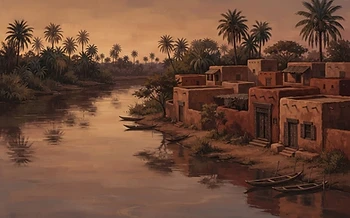
The òrìṣà religion and Ifá divination of the Yoruba, their Atlantic descendants (Haitian Vodou, Cuban Lucumí, Brazilian Candomblé), and the ngoma healing traditions of Southern Africa, including the sangoma's calling illness (ukuthwasa). Spirit possession is central rather than marginal, and the literature distinguishes it carefully from Western concepts of dissociation.
Orientation · Living / Closed (initiatory)
Alchemy
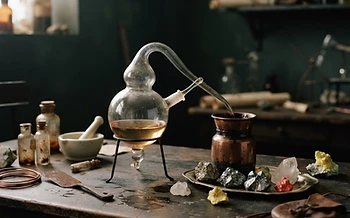
A tradition running from Hellenistic Egypt to the seventeenth century that combined laboratory practice with a symbolic account of transformation. Jung's reading of alchemy as a projection of individuation (1944) is influential in transpersonal work; historians such as Principe and Newman show most alchemists were pursuing material as well as spiritual ends. The page presents Jung's model as one interpretation.
Core · Open
Australian Aboriginal Traditions
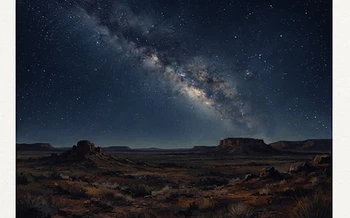
The traditions of over 250 Aboriginal and Torres Strait Islander language groups, centred on the Dreaming (Stanner's "everywhen"), Country as living relation, and Law transmitted through kinship and initiation. Knowledge is held by right and much is closed. This page links only to AIATSIS, the Indigenous-governed national institute, and offers no practice.
Orientation · Closed
Buddhism
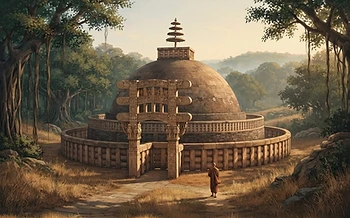
The traditions descending from the Buddha's analysis of suffering, impermanence and non-self (fifth century BCE). Theravāda, Mahāyāna and Vajrayāna differ substantially in doctrine and method, from the Pāli path of insight to Madhyamaka emptiness to tantric deity practice, while sharing the aim of liberation through direct understanding.
Core · Open / Living

Bwiti and Iboga
The initiatory religion of the Fang and neighbouring peoples of Gabon and Cameroon, formed in the late nineteenth and twentieth centuries from older forest traditions and Christian influence. Initiation uses iboga root bark to induce a night-long visionary encounter with the ancestors. The alkaloid ibogaine's later clinical use for addiction is a separate, medical development.
Orientation · Living / Closed
Christian Mysticism
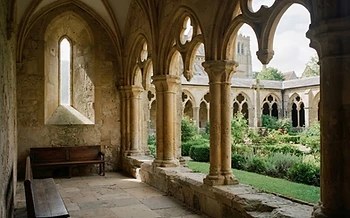
The contemplative strand of Western Christianity from Augustine and Pseudo-Dionysius through Eckhart, Teresa of Ávila and John of the Cross. Historians of the tradition describe it as consciousness of the immediate presence of God, conventionally mapped as purgation, illumination and union; the "dark night" is John of the Cross's own term (c. 1585).
Core · Open
Druidic and European Animism
Modern Druidry is a revival tradition dating from the eighteenth century (Iolo Morganwg) and organised in its present form since the 1960s; historical evidence for Iron Age druids is thin and mostly Roman. The page treats Druidry and contemporary European animism as living traditions in their own right, not as reconstructions, following Hutton's history.
Core · Open / Living
Eastern Orthodox Hesychasm
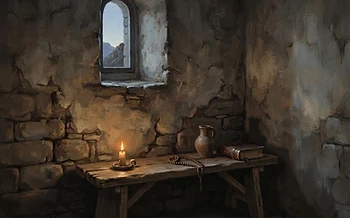
The Byzantine monastic tradition of inner stillness (hesychia), practised through the Jesus Prayer and watchfulness (nepsis), and defended theologically by Gregory Palamas in the fourteenth century. Its goal is theosis, participation in the divine energies rather than the divine essence. The tradition's key texts were gathered in the Philokalia (1782).
Full · Open (textual) / Living (monastic)
Gnosticism
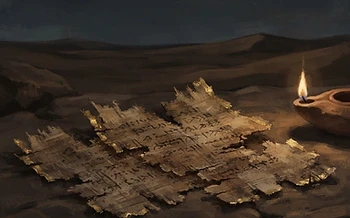
A cluster of second- and third-century movements, mostly Christian, known chiefly through the Nag Hammadi library (found 1945), sharing the themes of a divine spark, a flawed creator, and salvation through knowledge (gnōsis). Scholars including Williams and King argue "Gnosticism" is a modern category imposed on diverse groups; the page uses it with that caveat.
Full · Open (textual)

Greek Mystery Traditions and Neoplatonism
The initiatory cults of the classical world, above all Eleusis (c. seventh century BCE to 392 CE), and the philosophical mysticism of Plotinus (204–270 CE), for whom the soul's return culminates in union (henōsis) with the One. Iamblichus added ritual theurgy. Neoplatonism shaped Christian, Jewish and Islamic mysticism alike.
Full · Open (textual)

Gurdjieff and the Fourth Way
G. I. Gurdjieff (c. 1866–1949) taught that ordinary humanity lives in a state of mechanical "sleep" and that a "fourth way", distinct from those of the fakir, monk and yogi, can be pursued in everyday life through self-observation and self-remembering. The teaching is known chiefly through Ouspensky's account (1949) and is still transmitted in Work groups.
Orientation · Open / Living (Work groups)

Hermeticism
The Greek philosophical writings attributed to Hermes Trismegistus, composed in Roman Egypt between the first and third centuries CE and revived in Renaissance Florence through Ficino's 1463 translation. They teach the soul's ascent through knowledge of the cosmos. The Kybalion (1908) is a New Thought text, not a Hermetic source, and the page treats it as such.
Core · Open

Integral Consciousness Frameworks
Twentieth-century models of adult development and consciousness: Loevinger and Cook-Greuter's ego development, Kegan's subject–object theory, Torbert's action logics, Gebser's structures of consciousness, Wilber's AQAL, and Spiral Dynamics. Empirical support is strongest for the Loevinger and Kegan lineages and weakest for Spiral Dynamics and Wilber's synthesis; the page notes this per model.
Core · Open
Kabbalah
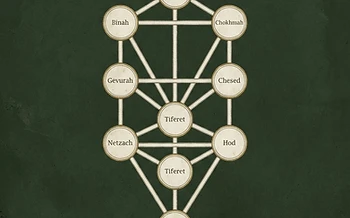
Jewish esoteric tradition emerging in twelfth- and thirteenth-century Provence and Spain, culminating in the Zohar (c. 1290) and reformulated by Isaac Luria in sixteenth-century Safed. Its central image is the ten sefirot emanating from the infinite (Ein Sof); Lurianic Kabbalah adds the shattering of the vessels and the work of repair (tikkun).
Core · Open (textual) / Living
Mesoamerican and Peyote Traditions
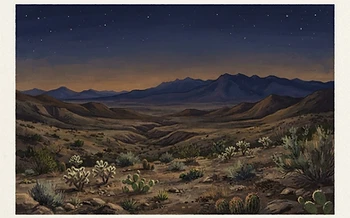
The Mazatec mushroom ceremony (velada), the Wixárika peyote pilgrimage and the Native American Church (incorporated 1918), whose peyote sacrament is legally protected in the United States. The Western psychedelic movement began with Wasson's 1957 account of María Sabina's velada; Mazatec communities have objected to the tourism that followed.
Orientation · Living / Closed (Native American Church)
North American Indigenous Traditions
The religious traditions of several hundred distinct nations, sharing a relational cosmology in which land, ancestors, animals and humans are kin, and expressed through ceremony, vision-seeking and story. Knowledge is held by right and by relationship; much of it is not open to outsiders. The page follows Deloria's insistence on sovereignty over meaning.
Core · Living / Closed

Secular and Naturalistic Mysticism
The study of non-religious and post-religious transcendent experience, from James's Varieties (1902) and Maslow's peak experiences (1964) through the Alister Hardy archive of ordinary religious experience to contemporary research on awe and psychedelic mystical experience. This is the background of most UK coaching clients, and the page gives such experiences a home without a theology.
Orientation · Open

Siberian and Central Asian Shamanism
The traditions of the Tungusic, Turkic and Mongolic peoples from which the word "shaman" (Evenki šamān) derives. The shaman is called, often through illness, to mediate between the community and spirits through trance and soul journey. Suppressed under Soviet rule, these traditions have revived since 1990. The wider use of "shamanism" as a universal category dates from Eliade (1951) and is contested.
Orientation · Living

Sikhism and Hindu Bhakti
Sikhism, founded by Guru Nanak (1469–1539) in Punjab and completed in the Guru Granth Sahib, teaches liberation through remembrance of the divine Name (nām simran), the dissolution of self-centredness (haumai) and service, within household life. The bhakti movements (sixth to seventeenth centuries) share its devotional, vernacular, anti-hierarchical character. Both are almost absent from transpersonal literature, and both are the traditions of a significant number of UK clients.
Orientation · Open (textual) / Living

South American Plant-Based Traditions
Amazonian and Andean ceremonial traditions using ayahuasca, tobacco, huachuma and other "teacher plants", from Indigenous Shipibo and other practice through mestizo vegetalismo to the Brazilian ayahuasca churches (Santo Daime, 1930s). Their globalisation since the 1990s raises questions of safety, consent and appropriation that the scholarly literature addresses directly.
Core · Living / Closed

Sufism
The mystical tradition of Islam (taṣawwuf), from eighth-century asceticism through the ecstatic and sober schools to the systematic metaphysics of Ibn ʿArabī (d. 1240) and the organised orders (ṭarīqa). The path is described as stations (maqāmāt) and states (aḥwāl) leading to the passing-away of the self (fanāʾ) and subsistence in God (baqāʾ).
Core · Open (textual) / Living
Tantra, Kashmir Śaivism and Śākta Traditions
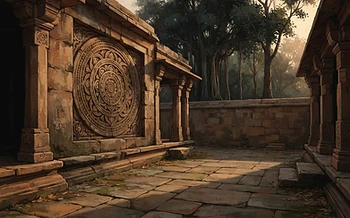
The Śaiva and Śākta tantric traditions of the fifth to twelfth centuries, reaching their philosophical height in Abhinavagupta's Trika (Kashmir, c. 1000 CE). Reality is the self-recognition (pratyabhijñā) of consciousness as Śiva–Śakti; practice works through the subtle body, mantra and kuṇḍalinī. Unrelated to modern "neo-tantra".
Full · Open (classical texts) / Living (initiatory lineages)

Taoism
The Daoist tradition from the Daodejing and Zhuangzi (fourth to third centuries BCE) through the organised religious movements from the second century CE. Central are the Dao as the unnameable source, non-forcing action (wu wei), spontaneity (ziran) and the balance of yin and yang. Scholars caution against a sharp division between "philosophical" and "religious" Daoism.
Core · Open
Taoist Internal Alchemy (Neidan) and Qigong
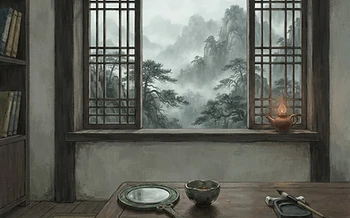
The Daoist practice tradition, developed from the Tang and Song dynasties (eighth to thirteenth centuries), that refines the "three treasures" of essence, breath and spirit through meditative circulation in the body. Modern qigong descends from it. Chinese medicine recognises a category of practice-induced disturbance (zou huo ru mo) that parallels "kundalini syndrome".
Full · Open (textual) / Living (lineage)
The Western Magickal Tradition
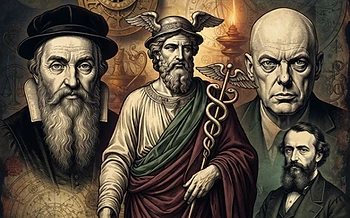
Modern ceremonial magic from the Hermetic Order of the Golden Dawn (1888) through Crowley's Thelema (1904) to chaos magick (1970s): a synthesis of Kabbalah, Hermeticism, tarot and astrology into graded initiatory systems oriented to the discovery of the "True Will". Academic study of the field is recent and treats it as a product of late-Victorian and modernist culture.
Core · Open

Theosophy, New Thought and the New Age Lineage
The Theosophical Society (1875), New Thought (from Quimby and Hopkins, later nineteenth century) and their twentieth-century descendants are the source of most popular vocabulary clients bring: the seven-colour chakra system (Leadbeater, 1927), ascended masters, channelling, the "law of attraction", ascension. This page exists to trace those terms to their origins.
Orientation · Open

Vedānta
Advaita Vedānta, given its classical form by Śaṅkara (c. eighth century), holds that the self (ātman) is not other than brahman, and that plurality is an appearance arising from ignorance (avidyā). Liberation is a matter of knowledge, not attainment. Other Vedāntic schools reject strict non-dualism.
Core · Open
Yoga
Classical yoga as systematised in Patañjali's Yogasūtra (c. 350–450 CE): an eightfold discipline aimed at the cessation of mental fluctuations and the discrimination of awareness (puruṣa) from nature (prakṛti). Postural practice as now taught is largely a twentieth-century development.
Core · Open