Version 1.0 · For trained practitioners. Not a self-help resource.
© 2026 Widdows Consulting Ltd
Greek Mystery Traditions and Neoplatonism
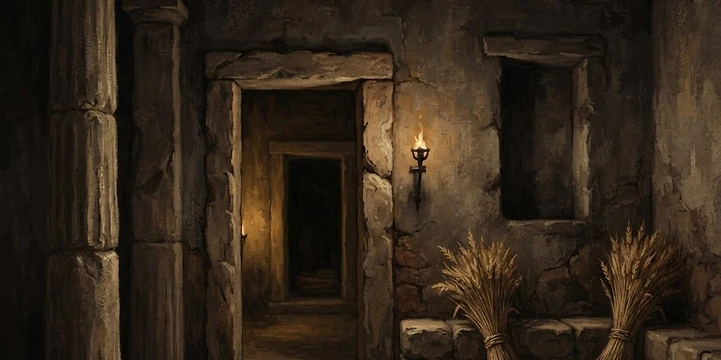
The initiatory cults of the classical world, above all Eleusis (c. seventh century BCE to 392 CE), and the philosophical mysticism of Plotinus (204–270 CE), for whom the soul's return culminates in union (henōsis) with the One. Iamblichus added ritual theurgy. Neoplatonism shaped Christian, Jewish and Islamic mysticism alike.
Mediterranean & Middle East · Status: Open (textual)
Draft — pending editor review · added beyond the first .pdf edition; correspondences exploratory. Correspondences are exploratory, not validated.
I · Overview & core concepts
The Greek mystery traditions approached the sacred through initiation: at Eleusis, through the Greater Mysteries celebrated for over a thousand years; in Orphism, through purification and teachings on the soul’s journey; among the Pythagoreans, through disciplined life as purification (katharsis). Plato reframed initiation philosophically: the cave of the Republic is a portrait of periagōgē, the turning of the whole soul toward the light. In late antiquity Plotinus taught henōsis — union with the One beyond being — and his pupil Porphyry and successor Iamblichus developed theurgy: ritual as a means of aligning the soul with the divine. The daimōn — Socrates’ familiar — names a guiding intelligence between human and divine (Shaw, 1995).
Kingsley (1999) argues for a contemplative, initiatory core in early Greek philosophy that later abstraction concealed; Uždavinys (2008) reads philosophy itself as a rite of rebirth. Wasson, Hofmann and Ruck (1978) proposed that the Eleusinian kykeon was psychoactive; the hypothesis is contested and is presented here as hypothesis only.
II · Coaching relevance
| Dimension | Source perspective | Secular framing |
|---|---|---|
| Presence | Periagōgē: the turning of attention toward the light | Reorientation of attention as the decisive move |
| Identity | The soul’s kinship with what is real | Self-concept held more lightly than its contents |
| Narrative | The cave and the ascent as story of change | Reviewing the “shadows” a client lives by |
| Regulation | Katharsis: ordered release and purification | Pacing and containing cathartic movement |
| Integration | The return to the cave to serve | Insight tested in teaching, care and ordinary work |
III · Transpersonal Diagnostics mapping
| Territory | Exploratory source correspondence |
|---|---|
| 1 · Consensus Reality | The cave: a life taken for shadows — busy, competent, and turned away. |
| 2 · Personal Narrative | Periagōgē: the first turning toward the light; the story loosens as attention turns. |
| 3 · Adjusted Cognition | Katharsis and Orphic purification: confrontation with what binds the soul. |
| 4 · Imaginal / Transcendent Visualisation | Theurgy: symbolic rites; encounter with daimones and the gods as the imaginal field is worked. |
| 5 · Oneness / Union with Source | Henōsis: union with the One — presence without object. |
| 6 · Ego Death / Dissolution | “The flight of the alone to the Alone”: the individual dissolves into the One. |
| 7 · Integration / Return | The return to the cave to serve — the philosopher-guide whose wisdom shows in the good of others. |
Cautions & referral
No specific cautions. Two scholarly notes: the mystery rites were secret and reconstructions remain reconstructions; and claims that the Eleusinian kykeon was psychoactive (Wasson et al., 1978) are contested — present as hypothesis, not fact.
IV · Practice activity
Turning · 12 minutes
Work with Plato’s cave image. Sit with the question: what are the shadows on the wall of your current life — the representations you treat as reality? Then: what would turning around actually require? Close with one small, concrete step toward the light, named out loud. Reflective and secular; this is not clinical care.
V · Further reading
Plotinus. (1991). The Enneads (S. MacKenna, Trans.). Penguin.
Kingsley, P. (1999). In the dark places of wisdom. Golden Sufi Center.
Shaw, G. (1995). Theurgy and the soul. Penn State University Press.
Uždavinys, A. (2008). Philosophy as a rite of rebirth. Prometheus Trust.
Wasson, R. G., Hofmann, A., & Ruck, C. (1978). The road to Eleusis. Harcourt.
Anchors (APA 7)
Burkert (1987), Ancient Mystery Cults; Stanford Encyclopedia of Philosophy, "Plotinus".